
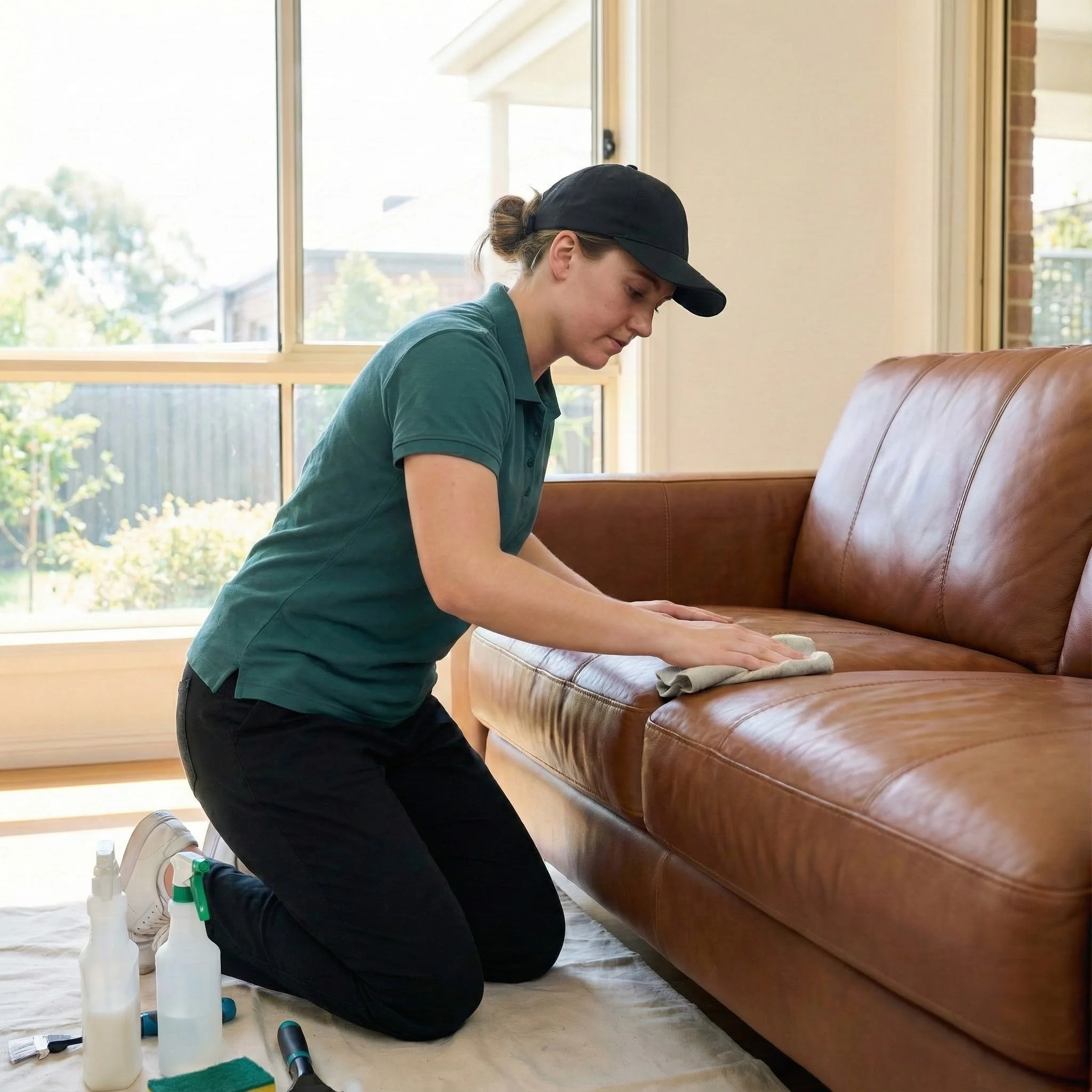
Darwin is the most challenging climate in Australia for leather furniture longevity. The AANT (Automobile Association of the Northern Territory) confirms leather as one of the most vulnerable natural materials to Darwin's wet season mould conditions. Understanding the specific mechanisms is the difference between leather that lasts and leather that deteriorates within a single tenancy.
During Darwin's wet season from November through April, indoor humidity regularly exceeds 80 percent. Leather is a porous natural material that absorbs atmospheric moisture. Sustained high humidity at Darwin's temperatures promotes mould growth on and within leather surfaces particularly aniline and semi-aniline types with minimal surface coating. Darwin residents consistently report leather sofas developing a musty odour through the wet season, even in well-maintained homes. That smell is mould growth, not general aging.
During Darwin's dry season from May through October, continuous air conditioning removes moisture from indoor air. The natural oils that keep leather supple are progressively depleted by this sustained dry-air exposure. The result is stiffening, surface cracking at armrest flex points, and fissuring that worsens with every dry season that passes without conditioning. This is why Darwin leather cracks are almost always found at armrests and seat edges, the highest-friction points where depleted leather fails first.
Darwin's UV intensity at its tropical latitude accelerates colour fade in leather placed near east or west-facing windows. Light-coloured and aniline leather pieces can show visible colour degradation within a single dry season without UV-resistant protective coating. Professional leather conditioning in Darwin before each season October before the wet and April before the dry is the maintenance schedule our team recommends for every Darwin leather piece.